Wednesday, March 13, 2019

Working with Immigrant Students and English-Language Learners

We watched this video from Guadalupe Valdes, in class, today (go to "videos," then "specialist commentary"). It gives great food for thought when it comes to working with English-language learners. As we expanded upon this video, we also came up with the following.

What should we know about the backgrounds of our students, particularly immigrant students and English-language learners?
  • How long have they been in school? What has their school experience been?
    • Cultural meaning of schooling; social networks formed within schools.
  • What is the family structure? Who is in the household? Why did they immigrate?
    • English proficiency of family/household members
  • What are their conceptual/content understandings?
    • Can they read and write in their native language?
  • Can they communicate common/daily needs/questions?
    • Do they understand me?
    • Where are they in the continuum of learning to speak conversation English (2-3 years) and learning to master academic English (5-7 years)?
  • Is there evidence of trauma?
  • What is their responsiveness to speaking English/American culture/structural assimilation, etc.? 
  • How can we minimize the role and impact of stereotypes?
    • Integrating the home country into the curriculum.
    • Use of native language to help with processing of content.
  • How can we pre-teach vocabulary found in our lesson, and provide practice using English at ratios of smaller than 30:1?

Wednesday, February 20, 2019

Cooperative Learning Principles

For next week's microteaching, you are are encouraged to incorporate cooperative learning principles. What are those?

Much school is individualistic ("my success is independent of your success or failure") or competitive ("my success comes at your expense"). A truly cooperative structure means we all "sink or swim together."

This is hard to achieve, especially in a competitive society. But we make it harder for ourselves when we assign students to do group work without clear functional roles, to perform tasks that are not "group worthy."

Consider, then, these principles, and see if you can integrate them into your teaching next week. Consider the Jigsaw teaching strategy as a paradigm of what cooperative learning might look like.

Cooperative Learning Principles

1. Positive interdependence: shared goal, rewards, resources, functional roles in group

2. Individual accountability: responsibility for own and group's learning

3. Promote face-to-face interaction: shared decisions about materials, monitoring and outcomes; reflection on the process

4. Collaborative skills: decision-making, trust, communication, conflict-management

5. Group processing: reflection on goal-achievement, fostering group working relations

Wednesday, February 6, 2019

Geography Resources for Secondary Social Studies

What is geography? Is it any more than maps and the absolute location of various physical features? How does geography impact history (and culture, and the economy)? How can geographic concepts and inquiry be used as part of education for democratic living? Does geography determine destiny? These are questions we would like you to be considering as you work your way through our consideration of the school subject of geography.

The links below will be updated as we go through our exploration. Please let me know if you would like others added!

Resources:

Why is north up?
Cartograms
The True Size of . . .
Mental Maps
What is a Continent?
Gapminder
Dollar Street
Historypin
Nat Geo Mapmaker Interactive
Google Tour Builder

Thursday, October 4, 2018

Meeting the Needs of All Kids through On-Going School-Wide Assessment

As a new teacher, you will be expected to understand and join school-wide initiatives that are meant to support the learning of all students. Our talk with Colleen Pringle, data coach at Haslett Middle School, was an awesome introduction to those practices as they exist in our host school.

MTSS, which stands for Multi-Tiered System of Support, is a system meant to track progress for all students--but with particular attention to those students who have traditionally fallen through the cracks. As this article explains, MTSS is "the practice of providing high-quality instruction and interventions matched to student need, monitoring progress frequently to make decisions about changes in instruction or goals, and applying child response data to important educational decisions."

MTSS has both an academic component and a behavioral or social component. On its academic side, it has incorporated a movement called RTI (Response to Intervention). On its behavioral side, it has incorporated a movement called PBIS (Positive Behavioral Interventions and Supports).

On the academic side, MTSS' most fundamental characteristic, and the one that most departs from past school practices, is universal screening. What we mean by this is that the progress of every child is monitored, mainly in the key areas of literacy and numeracy. We saw that HMS does this three times a year. Depending on how a child performs, there are various levels of intervention that will take place.

On the behavioral side, MTSS has encouraged schools to adopt uniform procedures for school life: school codes that set up expectations for how classroom routines will play out, for what a responsible learner and citizen looks like, and for how teachers will gain student attention ("clap if you hear me") or regulate student talk ("voice levels").

If a child is more-or-less on grade level in terms of their academics, and is not struggling behaviorally, they are in tier one. Tier one is thought of as normal classroom instruction. However, "normal" here does not mean business as usual, but rather as the embracing of certain school-wide instructional norms: the use of bellringers and exit tickets as powerful formative assessment strategies as well as consistent use of constructivist literacy strategies, such as "talk to the text." Every teacher plays a role in tier one strategies--especially social studies teachers, who do so much with informational text.

Tier two is where we target particular groups of students to help bring them up to grade level. At HMS, this happens when students are encouraged/advised to take reading or math support classes as an elective--one that is in addition to their core class (in that way, avoiding blatant tracking).

Tier three is for those students experiencing the greatest troubles in school. Often, this means a combination of behavioral and academic struggles. Here is where administrative attention is focused on bringing teachers, parents, and other support staff together to talk with and about the child, to search for strategies that might most benefit the child. The whole school works as a team to support the child.

The move away from marking periods and grades is a good thing. We need to help students formulate goals and help them keep in constant sight how they are doing as they reach for those goals. 

The downside here is that we start valuing only what we assess rather than assessing what we value. MTSS has focused on literacy and numeracy as important skills in a child's life. PBIS gets us toward a shared culture of behavioral norms. But we are far from helping kids set goals that go beyond academics and helping to cultivate their individual talents and gifts.

We have made a good start. It will be to the next generation of teachers to keep it going.

PS: To think more about what role data plays in today's schools, you might check out this podcast I made as I talked to a teacher, a parent, an administrator, and a comparative educational researcher about this issue.

Monday, February 26, 2018

National Student Walkout

As I’m sure you might have heard by now, a number of marches and protests are being planned in response to the recent school shooting at Marjory Stoneman Douglas High School in Parkland, Florida.

Perhaps the one receiving the most attention is Women’s March Youth EMPOWER’s call “for students, teachers, school administrators, parents and allies to take part in a #NationalSchoolWalkout for 17 minutes at 10am across every time zone on March 14, 2018 to protest Congress’ inaction to do more than tweet thoughts and prayers in response to the gun violence plaguing our schools and neighborhoods.”

Some schools have responded by saying they will suspend students who participate in any such activities during school hours.

What should the job of the social studies educator be in such a situation?

First, I would recommend you check with your mentor teacher and school administrators about how they plan to respond to any student walkouts. If your school has not had any discussions about their approach, perhaps you can suggest that the school be pro-active and organize initial discussions among the teaching faculty. Perhaps teach-ins for interested students might follow.

Second, I would have you consider what opportunities are available in your existing curriculum to discuss and study gun violence, gun control, and student protest. Where appropriate, consider studying the Parkland shooting, the media coverage, and responses from various social and political groups.

Finally, I would recommend that you view your own role, through all of this, as guardians of the democratic process. Of course, you are a citizen and have a right to form and share opinions (as do your students and colleagues). But as a social educator, I would argue that your main role is to assist students as they make up their own minds about the issues, in general, and the walkout, in particular.

A student can walk out of school for the wrong reasons—out of unthinking conformity or simply to get a day off. A student can stay in class for the wrong reasons—out of fear of suspension or unthinking conformity. As social studies teachers, our job is to help students reason about their course of action.

In short, while I think it is very appropriate for teachers to stand in solidarity with the victims of the shooting and to join the walkout on March 14, I think it essential that we preserve a thoughtful and free space where reasoned disagreement and peaceful protest have a space to (co)exist.

Friday, September 8, 2017

Challenging How We Remember the Past

I thought today's discussion about Hamilton was rich--though I wished a few more people felt comfortable jumping in. Thanks to everyone who spoke! (And sorry if any of you felt lost through parts of it! I'll do better on that in the future.)

What today's discussion boiled down to for me was that the musical Hamilton challenges how our society popularly remembers Hamilton--as an old, white-haired, "Founding Father"--who must therefore be dignified, stoic, selfless, and the like.

Instead, the musical portrays a "bastard, orphan, son of whore," an immigrant who, "just like [his] country," is "young, scrappy, and hungry." He drinks with his bros, he shoots off his mouth, he gets into duels, and he womanizes.

Is this what you thought of when you saw a ten-dollar bill?

Showing you the Tony performance of Battle of Yorktown was meant to complicate things further. You don't just hear the music and lyrics, but you see Black actors inhabiting white, slave-owner roles. Truly, the "world turned upside down!"

My question was whether we should embrace this or be careful with it? Is this redefining the traditional American narrative or confirming it? Are we led to think differently about women's and African Americans' roles in the Revolutionary period?

I don't think there is a clear answer to that question.

This leads me to your popular memory lesson plan assignment. As you think about your popular memory lesson, here are a few things to consider:

1) What form should your lesson plan take? Does it need to be elaborate?

My answer: It's up to you, but I think a formal lesson plan is best. If your school has a way to do official lesson plans, use that. If not, use the format we used last year. Create a "show-stopper" lesson plan, with all the bells and whistles, that you can use for the job search.

2) Should I critique how an event is normally remembered by Americans?

Yes, I think so. A really easy way to plan interesting history lessons is to take the "popular" or "Hollywood" version of a historical event and see what is changed, what is emphasized, and what is downplayed. Downright inaccuracies are interesting too!

If popular memory of the Holocaust is Germans = aggressor, Jews = victims, then a movie like Defiance, which shows the Jews actively resisting Germans, challenges us. If popular memory of the Holocaust is Germans = bad, Jews = good, movie like Schindler's List, which shows a German war profiteer coming to care about Jewish victims and working to save them, challenges us.

3) Can I use a non-written text?

Yes! Movie or movie clips are probably the best for this. But so are photos, or museum exhibits, or memorial plaques. Remember the past is all around us. So take a place where the past is commemorated or explained for the public and start to think about it with your students!

4) Anything else?

Yes. As I was thinking about it, you probably want to get student input as you start the lesson. Ask them to create a timeline, narrative or story about what happened and who was involved. It can be short and quick. That raw input lets you see how students remember the past and what differences exist in the class.

The point of this assignment is to help students challenge how we (however "we" is defined) remember the past and to ask how particular versions of the past reinforce stereotypes or benefit certain groups at the expense of others.

I think this is something that interests most people, so I'm hoping your students will find it interesting and you will have a successful lesson.

I really look forward to continuing this topic through viewing the film, Detroit, and discussing the complications involved in understanding the 1967 Detroit riots (disturbances? uprising? freedom fight?) and what it means for us today.

Tuesday, September 5, 2017

Curiousity and Teaching!

One of my all-time favorite commercials reminds us to, "stay curious, my friends!" Especially good advice for teachers.

This week, I asked you to figure out how your school community voted in the last presidential election and how that might impact your teaching. I thought it was a wonderful conversation. One thing that surprised me, though, was how hard this task was going to be for some of you.

For East Lansing, it was somewhat easy. The boundaries for the East Lansing School District overlap nicely with the city borders. This is not the case for many of you, that have school districts that draw from diverse townships and counties! Of course, even in East Lansing, with schools of choice, there are many students attending from outside the city borders. So defining who is in the East Lansing School District community is not so easy after all!

While information on Ingham County is easy to find, the city of East Lansing was a bit harder. Nonetheless, I could pretty easily find a chart of precinct reporting and do some easy math!

But some of you were going to have a harder time, with precincts spread across diverse political boundaries. It took some searching, but finding this map with the national precinct results--put together by a graduate student at Washington State University--was well worth my time spent looking around. What a great resource to use with our students!

There is a lesson here. As teachers, our own questions can drive our search for resources, which we can then share with our students! We never stop learning!

I look forward to talking about Hamilton and the power of collective memory over the coming weeks!

Wednesday, April 5, 2017

Dialogue Poems

Here's a link to the Honeybees Poem. Dialogue poems are a great activity for ending up a unit or applying some work you've done to explore multiple perspectives.

Friday, March 31, 2017

Economic Issues in American Democracy


Wednesday, March 22, 2017

The Office of Citizen in our Republic

Our unit on civics was quick, but hopefully you got some great ideas about how we can teach about government, the "office of the citizen," how deliberation fits into this all ("what should we do?"), and what the Michigan civics course looks like.

Note that while our unit focused in particular on mock trial, we can imagine doing mock townhall assemblies, legislatures, senate committee hearings, model UN, moot courts, and presidential cabinet meetings (Atomic Bomb, Cuban Missile Crisis, etc.). We'll get some more great ideas from each other as we go through our microteaching next week.

Here is the mini mock trail manual from which I am pulling our course--it's a great resource, so you will want to keep it handy.

Thursday, March 16, 2017

ELL Learning from Scott Johnson

Thanks to Scott Johnson for an awesome discussion about his sheltered social studies classroom at Everett High School. We saw the amazing diversity of his classroom, with 38 students from 16 countries represented!

Scott gave us some great tips and materials. Here are some of my own takeaways:

1) Scott has high expectations for his students, but he balances that with a realistic assessment of where they are at. He works to have his students meet him half way--sometimes, there is no perfect solution, just slow progress.

2) Scott actively teaches vocabulary. It's not enough to know a definition. Kids have to use the words, understand their importance, relate them to their own local context, and get lots of practice hearing and using social studies concepts.

3) Scott shows us its possible to ask big essential questions--what is a revolution?--while still adapting content and resources to the levels of an ELL learner. His webquest probably had reading material anchored at the upper elementary level, but he used it to leverage big ideas and important content.

4) Scott uses lots of picture--everywhere. On his PowerPoints, and in his exams!

5) Scott allows students to use their native language in his classroom--in particular, he allows more advanced students to translate for less advanced students.

6) Scott gets to know his students, but allows this to develop over time. His writing assignment about the American Dream happened in the second semester. Because students might be sharing traumatic memories and experiences, he wanted to build some trust before he jumped right into this.

Below are the material Scott shared with us. Thanks, again, Scott!

PowerPoint Presentation
Primary Document reading
Webquest
Adapted readings on inventions
Graphic organizer on inventions

Wednesday, January 18, 2017

World History Lecture Notes

World History Standards for Grade 7
 

1) Disciplinary Skills and Processes
2) Study of Specific Eras

o WHG Era 1 – The Beginnings of Human Society
o WHG Era 2 – Early Civilizations and Cultures and the Emergence of Pastoral Peoples
o WHG Era 3 – Classical Traditions, World Religions, and Major Empires
o WHG Era 4 – Expanding and Intensified Hemispheric Interactions


3) Final Project
4) Integration of Other Disciplines 


High School World History Standards 

 
1) Study of Specific Eras x Lens/Frames

o WHG Era 5 – The Emergence of the First Global Age, 15th to 18th Centuries
o WHG Era 6 – An Age of Global Revolutions, 18th Century-1914
o WHG Era 7 – Global Crisis and Achievement, 1900-1945
o WHG Era 8 – The Cold War and Its Aftermath: The 20th Century Since 1945

2) Final Project on Contemporary Issues
3) Social Studies Processes and Skills

In order to think about our units and lessons, we therefore have to have a process for drawing upon diverse standards across multiple areas of the document. In general, we want to integrate:


a) Global patterns, inter-regional interactions, and regional case examples
b) Essential research and literacy skills in the discipline
c) Concepts and connections from other social studies disciplines

What are ways that we can do this?
 

1) Plan units that are focused on an era, but that that have an essential question that links to another discipline.
 

Examples: 
§ Did the agricultural revolution solve or invent food scarcity? (history integrated with economics)
§ Did the agricultural revolution promote equality or inequality? (history integrated with government)
 

2) Make sure to integrate projects and activities into every unit that emphasize aspects of the inquiry arc (where students examine primary and secondary sources, make claims, and write narratives that evaluate agency, motive, and cause/effect).
3) Use regional case examples to illustrate global trends.
4) Look for moments of inter-regional “historical convergence”: trade, migration, war, empire, and cultural and technological diffusion.

World History Simulations


Wednesday, January 11, 2017

Writing Learning Objectives in the Social Studies Classroom

As I noted in class, the art of writing clear learning objectives is probably not essential to the work of teaching. As long as we are thoughtful about our purpose, concise formulations of how cognitive operations interact with specific subject-matter content are probably not going to make or break us as teachers.

On other hand, what Andrew and I noticed in class today was that by asking you to specify your cognitive operation, we tended to push you beyond simply asking students to “recall” or “know” the facts and theories of the social science disciplines.

This is a good thing.

It’s helpful to know about Turner’s “Frontier Thesis”—but it’s even more useful to debate whether or not that thesis really explains anything about the American character. That is, we must always recall there are many ways to interact with content—that true knowledge requires us to turn it about in our heads, and to ultimately decide on its significance and power.

It’s also really helpful, especially in world history, to get specific about content. Viewed in one way, all the material in a social studies courses are case examples about how humans act in certain situations. We should thoughtfully choose our case examples in order to broaden our students’ view of the world and to help them best understand the big ideas we are attempting to explore.

Teaching is not purely linear. In a good Socratic discussion, for example, we don’t always know where we will end up. We don’t know what the students will have learned. In this case, writing a learning objective is not even possible.

But the reality is that the current policies and trends require that we be able to formulate what we want students to do ahead of time. And that we be able to express these students performances in concise and technical language. Hence, the need for us to practice writing these learner outcomes and to include them on all of our public documents.

TE 408 Assignments

Here are links to our TE 408 assignments for the spring 2017 semester:

Objective Exam assignment
Formative Assessment assignment
Formal Lesson Plan assignment

Monday, November 21, 2016

All Children Need "Special Education"

The ideas behind UDL are, in some ways, pretty radical. As teachers, we “plan from the margins.” That is, we think about some of our most disadvantaged students as we contemplate our instruction.

I think we always have a student in mind when we plan our lessons. Perhaps this student is ourselves? While this is not a bad place to start—indeed, can we ever start from anywhere else but our own experiences?—I would argue that it is not enough.

For our own experiences as a learner only take on their full shape and meaning as we put them into dialogue with other experiences. In this way, I would argue for a type of “radical alterity” to be put at the heart of our planning.

That is, we should think about the children who might be most different from us in order to spot both commonalities and differences. To see what in our experiences is helpful for our teaching practice and to see where our own experiences might not actually be all that helpful as a guide to the learning needs for some of our students.

If we are always thinking about the “average” student, we risk treating all of our students as average—as typical, as not unique, as not a gift to the world.

But of course all children are gifts and carry with them gifts that the world is in desperate need of. When we plan from the perspective of those in most need of our assistance, hope and support, then we perhaps plan in ways that work harder to uncover those gifts.

That is going to be hard. But I think we have seen outstanding special education teachers over the past few weeks, ones who show us ways of teaching that we can adapt to make our classrooms more welcoming and more engaging for all students.

In this way, “special education” might become an education that recognizes what is special about all children.

Wednesday, October 26, 2016

Assessment: It's Simply a Way to Get to Know Your Students--And for Them to Get to Know Themselves!

Assessment is one of the trickier areas for us as new teachers to approach. For so long, assessment was done roughly the same way. On the high school level, at least, it was about grades, report cards, taking tests, and fitting oneself into a rank order.

Things have changed drastically over the past fifteen years, so it’s important to realize that our own experiences in this area may not be completely reliable guides for our professional actions in the future.

Take the issue of grades. We spent a bit of time in class trying to disentangle issues of grading from issues of assessment. While the two are no doubt linked, it is important that we do not let the current grading system totally determine our assessment practices.

At the end of the day, we will likely be required to give a student a single grade of either A, B, C, D or F. But that should not prevent us from providing that student and his or her family helpful and targeted information that will lead to a better appreciation for what needs to happen in the future.

It should not prevent us from communicating strengths and areas of needed growth, in the domains of knowledge, skills, interests, disposition, character, and leadership. It should not stop us from telling students whether or not they have met specific state-mandated standards.

Ben is an awesome example of a teacher who is continually refining and examining his assessment practices. He is currently playing around with a version of the “minimum fifty” policy—and he gives students a ton of choices and opportunities to play to their strengths and show what they know.

On the other hand, as we discussed in class, lots of choices comes with a downside: it means we can’t support students as much and that students are not, perhaps, gently nudged outside of their comfort zones.

Assessment can be one of the more inspiring areas for us as educators. It’s where we get to search out the hidden talents and gifts that each human being possesses. It’s where we help children connect what they can do—or what they are interested in doing—to the needs of the world. It’s where we help children discover their passions and help them reach out for them.

But it’s important that we don’t tell easy truths in this search for inspiration. We need to trust that kids can handle the truth. But to get to the truth, we need to be smart. We need to realize that no one instrument can tell us everything we need to know as teachers—even the best written test can’t do that.

So we need multiple forms of assessments, with multiple instruments: some project-based and some objective. With this rounded picture of summative assessment tools (and with the help of a ready stock of formative assessment strategies—something we will continue to talk about throughout the year), we, as teachers, can help take us out of the past of education and into its future.

Tuesday, September 27, 2016

The Many Paths of Curriculum


Broadly speaking, traditional methods courses like TE 407 and TE 408 are divided into three broad areas: curriculum (the what of teaching), instruction (the how of teaching), and assessment (how we know they learned what we taught).

Throughout the year, we will consider each of these three areas in some depth. But as you no doubt noticed, as we have started the year, we have given our greatest attention to curriculum.

Defining curriculum as “the what of teaching” works for everyday purposes. But it is also helpful to step back and think about curriculum in its broader meaning. The origins of the word come from the Latin, currere, which means “to run.” Its meaning was eventually extended to the track or course on which one runs. Curriculum can therefore be thought of as a journey—as the journey one takes throughout life. 


In the state of Michigan, as in the rest of the world, there is content that is assigned to each year of the schooling experience. For the past twenty-five years or so, this content has been organized into learning standards. Michigan’s newly proposed standards for k-12 social studies can be found here.

When teachers plan their instruction, they begin by consulting the relevant curriculum documents. These include standards documents and the local textbook that is assigned to your course.

What we have been practicing is the art of gathering multiple types of resources (written, visual, online, etc.) that can be used to teach the required content in a way that is both engaging and inclusive of multiple perspectives. But gathering is only the first step!

For it is how we ask questions that “pull out” all that a resource offers that is the true art of teaching. Indeed, one of the most important resources for your students is you! Think about how you can maximize the unique talents you bring to the classroom.

It is a question of how we can open up a space in which thinking and feeling and caring can happen.

Ultimately, as we leave this first unit of TE 407, we want you to understand that all of life has the potential to become curriculum. Indeed, as we prepare to assist Ben and the other teachers from Haslett Middle School on their field trip tomorrow, it is a great time to remind ourselves that true learning happens when the learner is able to organize their life experiences so as to go on growing in the future.

Our job as teachers is to learn how to take advantage of whatever the school day brings—a textbook reading, a guest talk from Mike Lupica, a lockdown drill, a school dance, or a field trip.

Great job through our first unit of the year! Andrew and I look forward to reading your curriculum resource assignments, which are due up on your website by Wednesday, October 5.

TE 407 Course Resources: September

Here are links to the course syllabus, the curriculum resource assignment, and the Michigan Social Studies standards.

TE 407 Syllabus

Curriculum Resource Assignment

Michigan Social Studies Standards


Google Earth Tours Presentation Schedule

Teaching in Ben's Class Schedule 

Monday, April 4, 2016

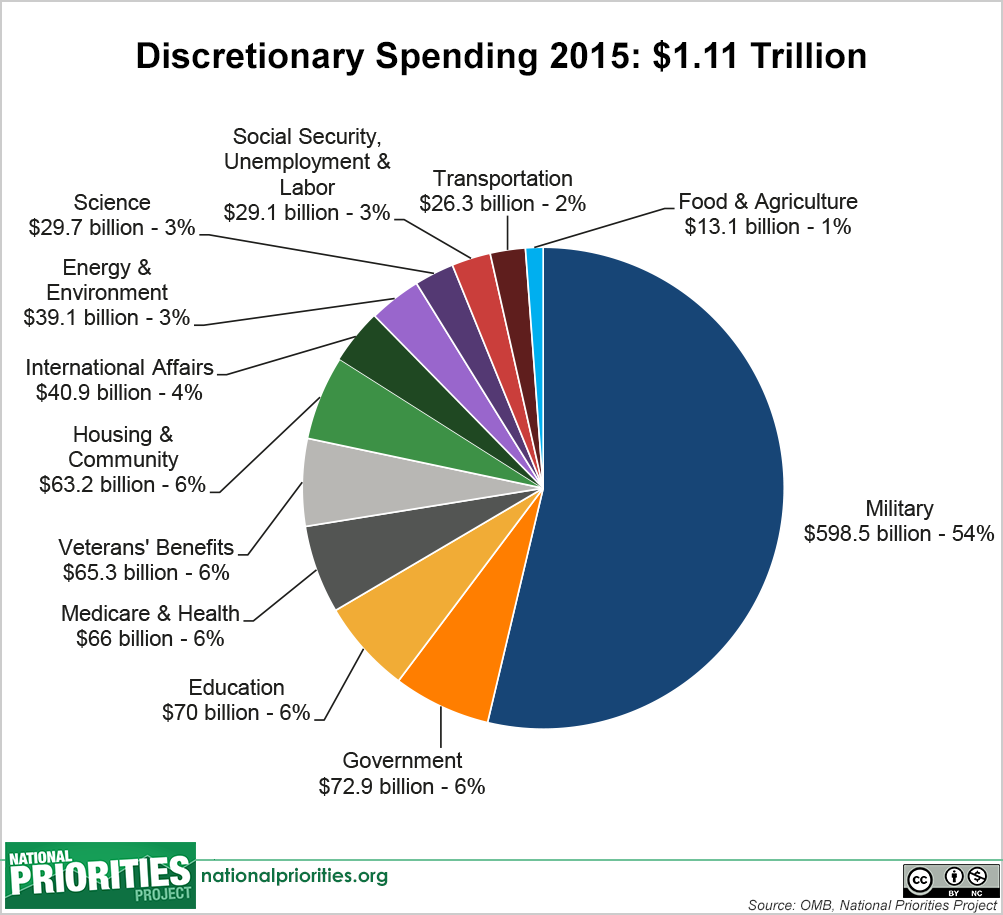
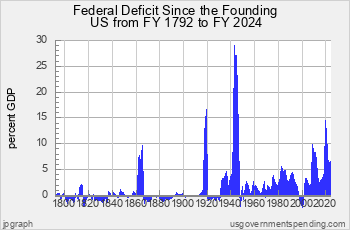
Teaching With Economic Data


Get into microteaching groups. Each group will receive one graphic. Your job is to be ready to jigsaw into teaching groups on Wednesday. You will use both discussion and direct instruction to teach your graphic. Each group will have up to fifteen minutes to teach their graphic and the issues related to it.